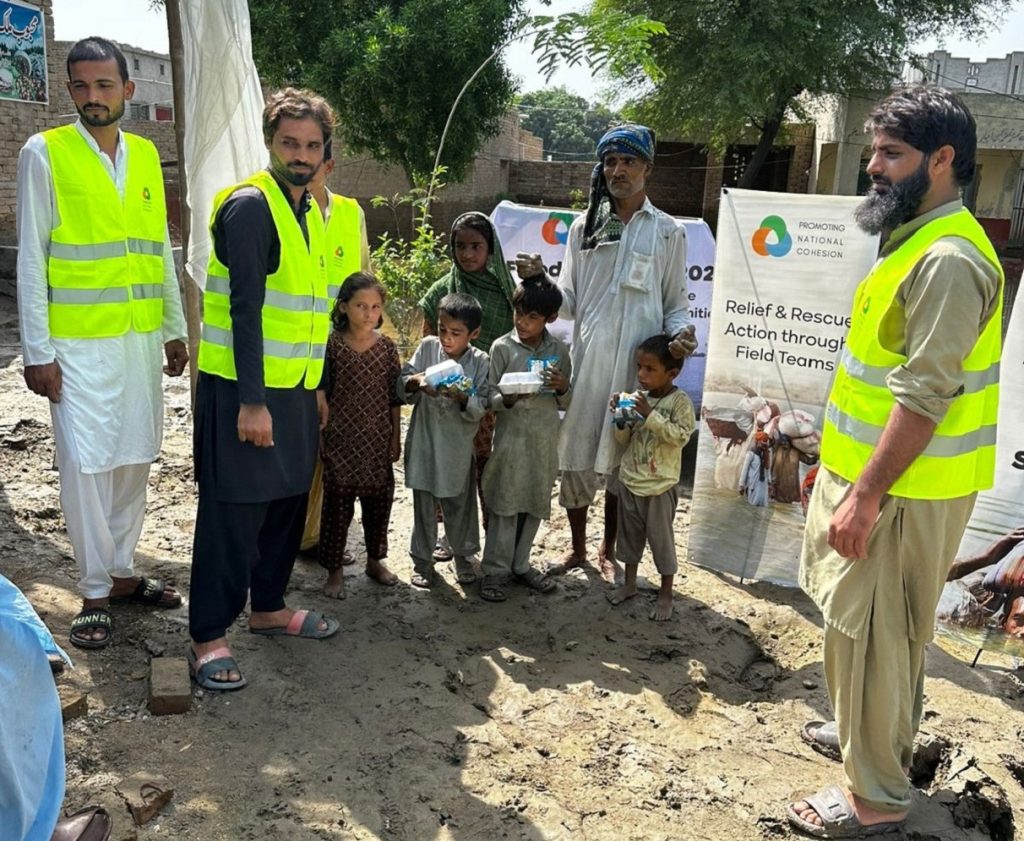
PNC’s Emergency Response Unit
Promoting National Cohesion’s Emergency Response Unit is a complete structure focused on providing immediate relief to the affected communities in case of any natural disaster. The unit was established as PNC engages youth and volunteer networks across the country which can strengthen the community based response in case of emergencies.
Pakistan is among the most disaster-prone countries in South Asia, facing a wide range of natural hazards due to its diverse geography, climate, and socio-economic vulnerabilities. From the towering peaks of the Himalayas and Karakoram ranges to the arid plains of Balochistan and the fertile floodplains of the Indus River, the country is exposed to earthquakes, floods, droughts, cyclones, heatwaves, and glacial lake outburst floods (GLOFs). These disasters not only cause immediate loss of life and infrastructure damage but also deepen poverty, disrupt livelihoods, and strain national development efforts.
There are several Geographical and Climatic Factors which make Pakistan vulnerable to the natural disasters. These include:
- Tectonic setting: Pakistan lies at the collision zone of the Indian and Eurasian plates, making it highly susceptible to earthquakes. The 2005 Kashmir earthquake and the 2013 Balochistan earthquake demonstrated the country’s seismic vulnerability.
- Riverine and monsoon flooding: The Indus River basin, which runs across Punjab and Sindh, experiences seasonal floods due to intense monsoon rains and upstream glacial melt. Prolonged inundation particularly affects Sindh, destroying crops and displacing millions.
- Mountain hazards: Northern Pakistan’s glaciers are vulnerable to climate change, increasing the risk of Glacial Lake Outburst Floods (GLOFs). Landslides triggered by heavy rains or seismic activity also threaten mountain communities.
- Coastal threats: The Makran coastal belt and Karachi face risks from cyclones, storm surges, and even tsunamis due to the Makran Subduction Zone.
- Arid zones: Balochistan, Tharparkar, and Cholistan regions are prone to prolonged droughts, water scarcity, and desertification.
- Extreme weather: Rising temperatures have increased the frequency of heatwaves, particularly in Sindh and Punjab, with Karachi experiencing deadly heat events in recent years.
Along with it, there are serious socio-economic vulnerabilities of people across different regions. These include:
- Population density and poverty: A large share of Pakistan’s population resides in disaster-prone regions (riverine plains, coastal belts, mountainous areas), with limited access to resilient housing and infrastructure.
- Agricultural dependence: As an agrarian economy, Pakistan is highly vulnerable to floods, droughts, and heatwaves that damage crops, livestock, and food systems.
- Weak infrastructure: Many rural and peri-urban communities lack robust housing, drainage systems, and healthcare facilities, amplifying disaster impacts.
- Urbanization challenges: Rapid, unplanned urban growth in cities like Karachi and Lahore increases exposure to flooding, heat stress, and industrial hazards.
- Limited preparedness and awareness: Gaps in early warning systems, community-level preparedness, and disaster education further heighten risks.
As a national organization, Promoting National Cohesion considers it a responsibility to stand along with the philanthropists and donors, the provincial and federal government and the development organizations to reach the communities in need. PNC’s ERU is managed by an Emergency Coordinator along with all programmatic heads as part it. The unit heads provide all available support to the EC for managing any emergency situation.
PNC’s Flood Response for 2025

Punjab and Sindh experience different flood patterns that shape response needs. Punjab frequently faces riverine and flash flooding along the Indus tributaries (Sutlej, Chenab, Ravi, Jhelum), with rapid inundation of agricultural plains and displacement in rural and peri-urban areas. Sindh faces seasonal monsoon and riverine flooding across the Indus basin, prolonged inundation in low-lying districts, and coastal storm surge risks in southern districts. Floods cause immediate life-threatening hazards (drowning, injury), secondary public-health risks (waterborne disease, malnutrition), shelter loss, destruction of livelihoods (crops, livestock, fisheries), damage to WASH infrastructure, and protection risks (gender-based violence, child protection concerns).

PNC’s interventions were guided by humanitarian principles, complement government-led efforts (PDMA, district administrations), and focus on saving lives, reducing suffering, protecting dignity, and enabling early recovery.
Response Objectives
- Immediate life-saving assistance: Provide search & rescue support where feasible, emergency medical care, safe water, hygiene, emergency shelter and essential non-food items (NFIs).
- Health & Preventive Services: Prevent outbreaks through WASH, vaccination support, and mobile medical teams.
- Protection & Social Support: Safeguard women, children, older persons and persons with disabilities; provide psychosocial support.
- Livelihoods & Early Recovery: Restore basic livelihoods (seeds, livestock feed, cash for work), repair critical infrastructure (water points, sanitation), and support shelter repairs.
- Accountability & Coordination: Ensure two-way communication with affected communities, coordinate with PDMA, NDMA, UN agencies and other NGOs, and adhere to standards (Sphere, IASC).

Phased Activities & Operational Tasks
The activities were planned in a phased manner with clear operational tasks in each region to the specified teams.
Phase I — Preparedness & Pre-deployment (during early monsoon alert)
- Maintain prepositioned stocks (tents, plastic sheeting, jerry cans, water purification tablets, hygiene kits, emergency food packs, mosquito nets).
- Update contingency plans and district-level risk maps.
- Strengthen relationships with PDMA, district administrations, local NGOs and community leaders.
- Train rapid response teams in flood search & rescue basics, first aid, psychosocial first aid, and gender-based violence (GBV) referral protocols.
- Establish communications (satellite phones where needed), transportation and warehousing agreements.

Phase II — Week 1-4 (Immediate / Life-saving response)
- Rapid needs assessment: Deploy rapid assessment teams (multi-sector) to priority districts to collect standardized data (household counts, displacement, immediate needs).
- Emergency WASH: Distribute safe drinking water (water trucking, bottled water if needed), set up emergency water points and deliver water purification tablets; deploy emergency latrines in collective shelters.
- Health & Medical: Deploy mobile medical teams and emergency medical kits; coordinate with local health departments for immunization catch-ups (e.g., measles) if risk is high.
- Shelter & NFIs: Distribute tents, tarpaulins, blankets, sleeping mats, kitchen sets, and women’s dignity kits.
- Protection & PSS: Establish safe spaces for women and children, provide psychosocial first aid; activate referral pathways for GBV, child protection and clinical care.
- Coordination: Participate in district coordination meetings, share early assessment findings, and map service gaps.
Phase III —5th Week Onwards (Stabilization)
- Scale up WASH: Repair/rehabilitate hand pumps and water systems where possible; expand emergency latrines with separation by sex and accessible designs. Launch hygiene promotion campaigns (household-level messaging on water treatment, safe storage, sanitation, and handwashing).
- Nutrition: Conduct rapid screening for acute malnutrition among children under five and pregnant/lactating women; initiate therapeutic/supplementary feeding referrals.
- Expanded health services: Support primary health centres, cholera preparedness (ORS, IV fluids, cholera kits) and vector control measures (larval source reduction, distribution of bed nets if indicated).
- Shelter repair & cash assistance: Provide conditional cash transfers or voucher schemes for urgent shelter repair or NFIs; supply core relief items for families not reached earlier.
- Livelihood protection: Disburse emergency input packages (certified seeds, fertilizer, toolkits) timed to cropping cycles, and provide feed and veterinary support for livestock.
- Infrastructure repair: Rehabilitate community water schemes, school WASH facilities, repair critical access roads and bridges where possible in partnership with authorities.
- Psychosocial support & education: Reopen temporary learning spaces; provide teacher training and learning materials; sustain PSS services.
- Livelihood rehabilitation: Provide training, small business grants, and agricultural rehabilitation support (sowing calendars, crop diversification advice).
Phase IV — 3–24 months (Recovery & Resilience)
- Risk reduction & DRR: Support construction of flood-resilient shelters, elevate critical infrastructure, promote flood-resilient agricultural practices, and community-based early warning systems.
- Advocacy & Policy: Advocate for longer-term recovery funding, insurance schemes for farmers, and improvements in drainage and water management.
- Monitoring & Handover: Monitor recovery outcomes, handover services to local actors, and document lessons learned.
Cross-Cutting Components
One of the most important factors for emergency programs include protection of vulnerable groups. PNC employs specific approaches to ensure the marginalized groups are provided considerable assistance and support for rehabilitation.
Protection & Gender
- Apply a gender analysis to all interventions. Ensure distributions and shelter sites have safe access, lighting, separate sanitation, and GBV referral points.
- Appoint focal persons for child protection and GBV; integrate safe reporting mechanisms and confidential case management.
Accountability to Affected Populations (AAP)
- Establish community helpdesks, feedback hotlines, suggestion boxes, and conduct regular information sessions in local languages (Urdu, Punjabi, Sindhi, Seraiki as relevant).
- Publish distribution lists and criteria publicly; maintain transparent beneficiary selection.
Inclusion & Accessibility
- Identify and prioritize vulnerable groups (elderly, persons with disabilities, minority communities, female-headed households) in targeting and design accessible services.
Environmental Considerations
- Ensure safe disposal of latrine waste, avoid open burning of relief items, and consider environment-friendly options for temporary shelters. Integrate vector control to minimize disease risk.
Coordination & Partnerships
It is imperative to manage strong coordination with all stakeholders for an effective partnership management on the ground. PNC ensures it through cross communication channels across the board. These include:
- Government bodies: Work under the leadership of PDMA (Punjab/Sindh), district administrations, and link with municipal authorities for site approvals and service restoration.
- Humanitarian actors: Join cluster/sector coordination (WASH, Health, Shelter, Protection) and share assessment data and gaps.
- UN & INGOs: Coordinate with agencies (UNICEF for WASH/Child Protection, WFP for food/cash, WHO for health) for technical support and resource mobilization.
- Local NGOs & CBOs: Leverage local partners for access, culturally appropriate messaging, and sustained follow-up.
- Private sector & donors: Engage logistics providers, suppliers, and private donors for rapid procurement and funding.
Join PNC’s Flood Response
If you’re a philanthropist, donor or an organization looking to assist the flood affected communities, you can support through multiple means. For information, contact at pnc@pncpk.org or +92-333-5574727.